
PO:34:211 | Gynecological health and ultrasound evaluation among fertile women affected by Systemic sclerosis: an observational study
Martina Orlandi1, Sofia Gambigliani Zoccoli2, Mariagrazia Nuara1, Riccardo Cuoghi Costantini2, Amelia Spinella1, Marco De Pinto1, Antonio La Marca2, Dilia Giuggioli1 | 1Dipartimento di Scienze Mediche e Chirurgiche, Università di Modena e Reggio Emilia, Italy; 2Dipartimento Materno Infantile. Università di Modena e Reggio Emilia, Italy
Abstract
Scope of the Work. Systemic sclerosis (SSc) affects mostly womenand can affect various aspects of a woman's life, including the menstrual cycle, reproductive life and sexuality.
Aim. The aim of this study is to provide a comprehensive report on gynecological health in childbearing age SSc patients, from both clinical and ultrasonographic point of view.
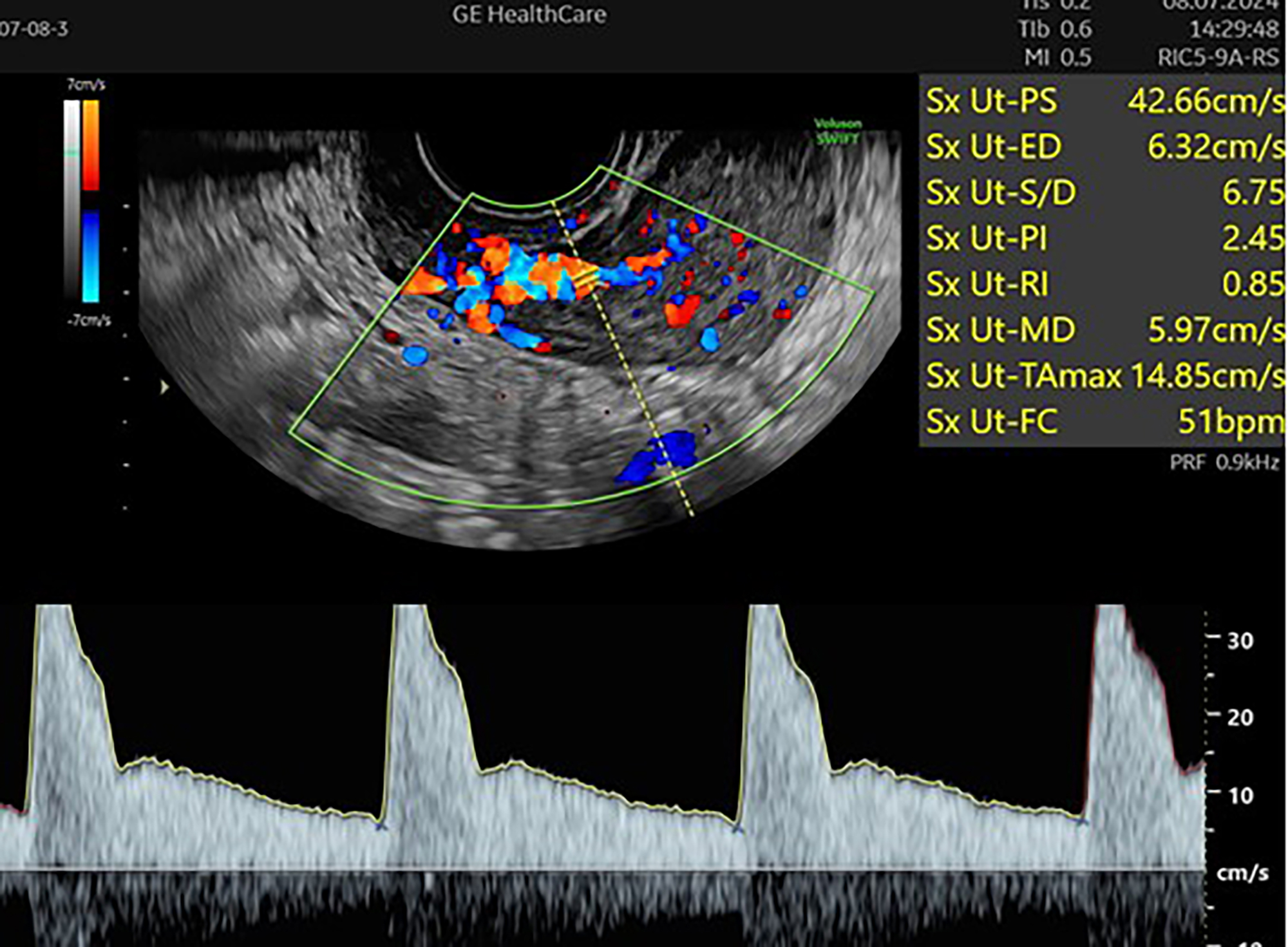
Materials and Methods. This is an observational, single-center study with a case-control part and a second cross-sectional phase regarding pelvic and ultrasound evaluation that was performed only in patients. The inclusion criteria were diagnosis of SSc, fertile age, not pregnancy, not breastfeeding. Health controls (HC) were age matched. Patients with cardiorespiratory failure, overlap forms, other uro-gynecological pathologies were excluded. Each enrolled patient underwent both rheumatological and gynecological evaluation with pelvic examination and transvaginal ultrasound with uterine resistance assessment. The ultrasound was performed using Voluson SWIFT BT23, GE. The uterine arteries (UtA) assessment was made using Doppler and the Pulsatility index (UtA-PI). The presence of sexual dysfunction was evaluated using the female sexual function index (FSFI). Menstrual distress through the menstrual distress questionnaire (MEDI-Q) and urinary health through the Urinary Symptom Profile (USP). Quality of life (QoL)was assessed with the Short-form-12-health-survey (SF -12).
Results. Twenty-nine SSc patients and 33 HC were enrolled. Patients had a limited subset of disease in 54% of cases, with Scl 70 positivity in 45% of cases, mean disease duration of 5.7 and mean age of 39.57. Compared to HC, patients had a higher number of recurrent urinary (p = 0.007) and vaginal (p = 0.049) infections. Menstrual disorders were more frequent in SSc patients and associated with greater discomfort (p = 0.048 for total MEDI-Q and p = 0.006 for symptoms). Regarding sexual function, dyspareunia was reported by 40% of patients (p=0.018), with a higher presence of sexual dysfunction (FSFI <26.5 p = 0.033). Patients with SSc had a lower QoL compared to controls both in the physical (p = 0.007) and psychological (p = 0.043) domains. At pelvic ultrasound, adenomyosis was found in 26% of patients and endometriosis in 18%, which is higher than those estimated in the general Italian population (~5-10%). Patients with endometriosis reported chronic pelvic pain more frequently (p=0.010) and had a higher incidence of pelvic adhesions (p=0.026). Increased uterine artery resistance (values >95th percentile) was observed in 14% of patients. These patients reported dyspareunia (p=0.006) and ovulatory pain (p=0.008) more frequently than those with normal resistance.
Conclusions. The results highlight a high prevalence of gynecological, menstrual and sexual dysfunctions in patients with SSc, with a significant impact on QoL. For the first time, an increase in uterine artery resistance is also documented in these patients, with possible implications on pelvic vascularization and gynecological symptoms.
Metrics
Citations and online attention from Dimensions, Altmetric and PlumX.
License
Copyright (c) 2026 The Author(s)

This work is licensed under a Creative Commons Attribution-NonCommercial 4.0 International License.
PAGEPress has chosen to apply the Creative Commons Attribution NonCommercial 4.0 International License (CC BY-NC 4.0) to all manuscripts to be published.